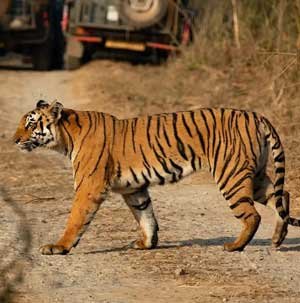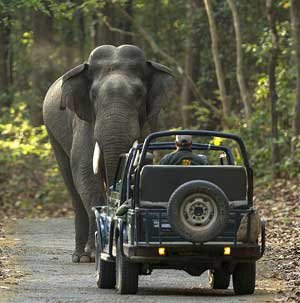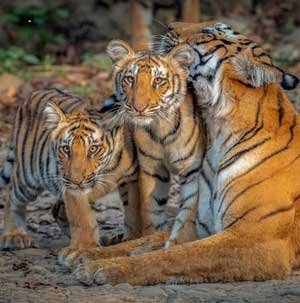
The Bijrani Safari Zone is one of the most popular zones of Jim Corbett National Park, known for its rich wildlife and scenic landscapes.It features a mix of dense Sal forests, open grasslands, and water streams, making it ideal for tiger sightings.The zone is accessible via the Amdanda Gate, just a few kilometers from Ramnagar.Jeep safaris are conducted twice daily (morning and evening) from mid-October to June.With its high chances of spotting big cats and birds, Bijrani is considered a must-visit zone for wildlife enthusiasts.
Overview & Location
- Bijrani is one of the principal tourist safari zones in Jim Corbett National Park, and is considered the most visited after Dhikala.
- The entry point is via the Aamdanda / Amdanda Gate, located very close to Ramnagar town (about 1–2 km) which makes it quite accessible.
- After the gate you pass through a buffer zone of about 5 km before entering the core area of the Bijrani zone.
- It features a mix of open grasslands (“chaurs”), dense Sal forests, water-streams/ drains and varied terrain.
Wildlife & Natural Features
- Bijrani is known for high probability of tiger sightings, making it a favourite for wildlife-enthusiasts.
- Other wildlife : elephants (herds), sloth bears, various deer species (Chital / spotted deer, Sambar, Hog deer), wild boar, leopards (occasional) and diverse bird-life.
- Bird-watching is strong here : some sources quote “over 600 species” of birds in the region.
- Vegetation & terrain : mixture of thick Sal forest, broad grasslands (chaurs), streams/water holes. This varied terrain helps attraction of diverse fauna.
- Because of the open grasslands & visibility, the zone is considered more “accessible” for spotting big fauna than some denser zones.
Visitor Zone, Timing & Booking
Open season : The Bijrani Zone is typically open from 15 October to ~30 June (i.e., closed during the heavy monsoon months approximately July to mid-October).
Safari type : Day-jeep safari (morning & evening shifts) is available. Unlike Dhikala, canter safaris are not the norm here in terms of big buses.
Vehicle limit : Up to ~30 safari jeeps allowed per shift in Bijrani.
Timings (approx)
- Winter (Nov-Feb): Morning entry ~07:00 exit ~10:00; Evening entry ~14:00 exit ~17:30.
- Summer (Mar-Jun): Morning ~06:00 exit ~09:30; Evening ~15:00 exit ~18:30.
Vehicle & Booking Rules
Advance booking is highly recommended. A guide/naturalist and a registered safari vehicle are mandatory for entry. Permits are needed from the forest office (often in Ramnagar).
- Maximum number of safari jeeps per shift in Bijrani : around 30 jeeps.
- Each jeep typically accommodates 6 adults + 2 children (under 12) plus driver & guide. A trained guide (also called “naturist”) is mandatory.
- Permits are required to enter; booking online in advance is recommended (often up to 45 days ahead); evening permits may be on first‐come basis.
Landscape, Flora & Fauna
- The zone features a mix of dense Sal (Shorea) forests, open grasslands (chaurs), and water-streams/drains.
- Wildlife highlights include -
- Tigers : Bijrani is considered one of the best zones in Corbett for tiger sightings (only second to Dhikala) because of its favourable terrain and prey base.
- Other mammals : Wild elephants, sloth bears, deer species (Chital/Axis axis, Hog deer/Axis porcinus, Sambar/Cervus unicolor) and antelopes.
- Birds & other fauna : It is also popular among bird-watchers, with many resident and migratory species.
- The atmosphere is described as tranquil yet rich in wildlife encounters — a “jungle-feel” rather than purely open safari ground.
Best Time to Visit & Seasonality
- The Bijrani zone is generally open for tourists from 15th October to 30th June (or mid-October to late June) — closed for day visits (and sometimes overnight) during heavy monsoon months.
- The monsoon period (July to early October) is when many zones including Bijrani get closed due to safety, landslides, flooding etc.
- Best wildlife sightings (especially big cats) are often in the cooler months (Nov-Feb) when animals may come out more, although summer has its charms (less dense foliage, more grassland visibility).
How to Reach & Nearby Info
- Nearest town : Ramnagar (district Nainital, Uttarakhand) — the gate is just near Ramnagar, making Bijrani very accessible.
- Nearest railway station : Ramnagar Railway Station. Nearest airport: Pantnagar Airport (~90 km) for many visitors.
- Road : After entering the gate, you traverse the buffer zone (about 5 km) and then enter the safari zone proper.
Accommodation & Facilities
- Inside the zone there are Forest Rest Houses (FRHs) you can stay in :
- Bijrani FRH : multiple rooms + dormitory, restaurant/canteen.
- Malani (or Mailani) FRH : quieter, good for birdwatchers.
- Outside the core zone (near Ramnagar or Dhikuli) many resorts/hotels are available for day visitors.
- Facilities inside the park are limited, and strict rules apply (e.g., no personal vehicles beyond gate, no feeding wildlife, etc.).
Important Tips & Things to Keep in Mind
Monsoon closure : Be aware that the zone is closed during the monsoon months (and roads/tracks may be slippery or inaccessible). Always check current status.
Vehicle & guide requirements : Only authorised safari vehicles & official guides can take you in. No private vehicles permitted into core zones.
Wildlife sightings are not guaranteed : While tiger sighting chances are good, wildlife is unpredictable. Be patient, keep quiet, follow guide instructions.
Dress and equip : Wear neutral‐coloured clothes, bring binoculars/zoom camera, comfortable shoes, insect repellent, sun‐protection and a water bottle.
Stay alert & respectful : Maintain silence on safari, no littering, follow rules of the forest; keep safe distance from animals and do not provoke them.
Timing matters : Early morning is generally considered best for sightings (lighting, animal activity).
Accommodation booking : If you plan to stay within the zone (FRH inside), book well in advance — often limited rooms and high demand.
Entry time and exit time : Be sure to know your exact shift’s entry & exit time; vehicles not allowed beyond exit time.
Proximity to town : Since the zone is close to Ramnagar, you’ll find good lodging, dining, and other facilities nearby.
Best time of year : Post-monsoon to early summer (e.g., October/November and March/April) often provide good weather, clear visibility and active wildlife.